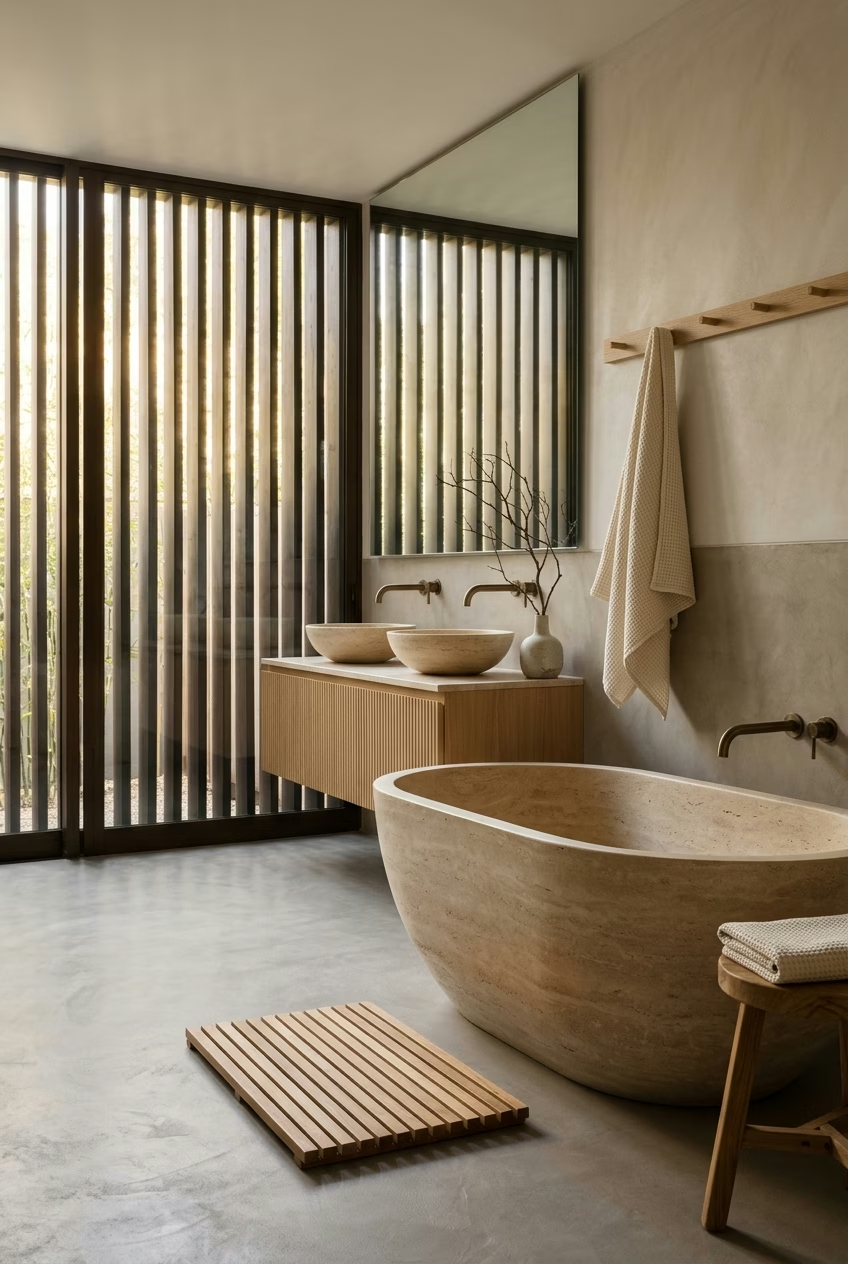
The modern dining room is no longer an overly formal, seldom-used showroom. In recent design seasons, the harmonious convergence of Scandinavian practicality and Japanese wabi-sabi philosophy—known globally as Japandi—has transformed dining spaces into warm, intimate gathering sanctuaries.
A well-crafted Japandi dining room celebrates tactile material honesty, organic curved silhouettes, natural timbers, and sculptural ambient illumination. By prioritizing visual calm and intentional craftsmanship over ornate excess, these spaces foster mindful dining and effortless entertaining.
Here are 12 curated modern Japandi dining room ideas shaping luxury interior design in 2026.
1. The Monolithic Rounded Solid White Oak Dining Table
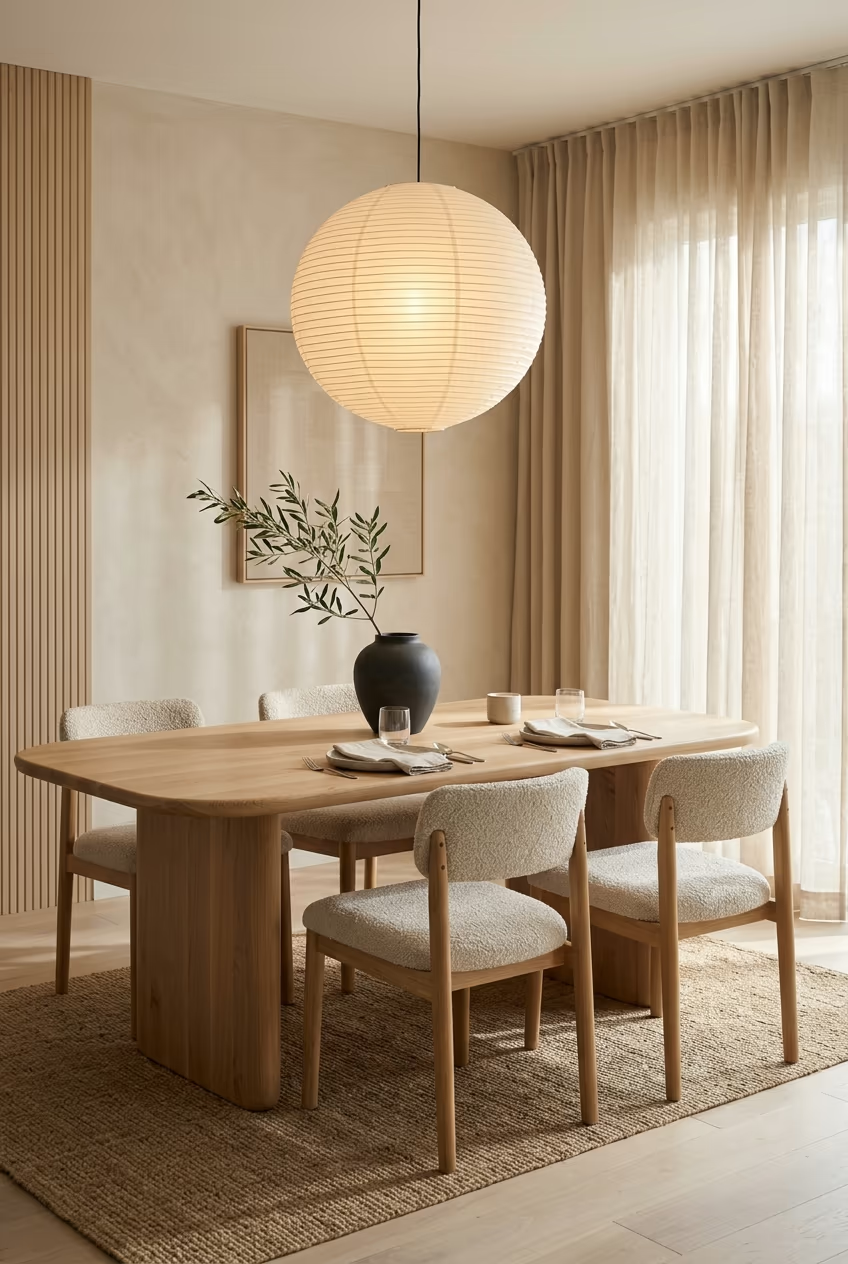 Pin this look: A curated Japandi dining space featuring an organic curved white oak table, bouclé seating, and sculptural washi paper pendant.
At the heart of every Japandi dining room sits the table. In 2026, sharp rectangular corners give way to softly rounded pill shapes, organic curved edges, and chunky cylindrical pedestal bases:
- Wood Selection: Natural rift-sawn white oak, light ash, or bleached walnut with a matte polyurethane or hardwax oil finish that preserves the tactile grain.
- Proportions: Generous tabletop depth (at least 38 to 42 inches wide) allows effortless center placement of shared platters, stoneware ceramics, and floral arrangements.
- Tactile Edge Profiles: Half-bullnose or eased organic edges soften the architectural presence of substantial timber slabs.
2. Oversized Akari Washi Paper Lantern Pendants

Lighting serves as the defining crown of a minimalist dining room. Drawing deep inspiration from Isamu Noguchi’s timeless Akari light sculptures, oversized paper pendants add grand volume without visual heaviness:
- Diffused Evening Glow: The delicate fibers of authentic Japanese mulberry paper filter artificial bulb glare into a warm, candle-like ambiance (opt for 2700K dimmable LED warm bulbs).
- Hanging Elevation: Suspend the bottom of the pendant between 30 and 34 inches above the tabletop surface to maintain clear conversational sightlines while anchoring the dining zone.
3. Curved Dining Chairs in Oatmeal Bouclé & Woven Cord

Comfort is paramount in Scandinavian hygge. Rather than stiff, upright dining chairs, Japandi spaces integrate low-slung, ergonomic silhouettes that invite guests to linger for hours after dinner:
- Textile Upholstery: Tactile oatmeal bouclé, slub linen, or brushed wool backrests paired with solid ash wood frames.
- Paper Cord Weaving: Danish paper cord seats (reminiscent of Hans Wegner’s iconic craftsmanship) offer flexible, breathable seating that patinas beautifully over decades.
4. Vertical Fluted Oak & Limewash Accent Walls
Architectural backdrop detailing elevates a neutral color scheme from flat to deeply atmospheric:
- Micro-Fluted Slat Panels: Narrow vertical wood slats behind a low credenza create an acoustic buffer, eliminating dining room echo while introducing subtle shadow lines.
- Mineral Limewash Plaster: Roman clay or breathable limewash paint in shades of bone, warm linen, or mushroom beige provides a soft, cloudy matte texture that reacts organically to shifting daylight.
5. Low-Slung Minimalist Floating Sideboards
Storage in a Japandi dining room remains discreet and unobtrusive:
- Push-to-Open Millwork: Floating wall-mounted consoles with handleless, continuous veneer grain fronts preserve clear floor lines, making modest dining footprints feel substantially larger.
- Display Restraint: Style the sideboard surface with only two or three thoughtful items: a dark travertine tray, a single sculptural ceramic vessel, and a small stack of architectural monographs.
6. Minimalist Ikebana Florals: Architectural Greenery
Japandi dining tables avoid busy, brightly colored flower arrangements in favor of Ikebana—the contemplative Japanese art of arranging natural branches:
- Single Branch Statements: A single clipped olive branch, Japanese maple clipping, or budding magnolia branch in a rough, hand-thrown ceramic vase creates instant artistic drama.
- Stoneware Vessels: Unglazed matte ceramics with imperfect wabi-sabi textures in charcoal, terracotta, or off-white.
7. Chunky Ribbed Flat-Weave Area Rugs
Defining the dining zone within open-concept layouts requires deliberate textural boundaries:
- Low-Pile & Flat-Weave: While living rooms benefit from plush shags, dining rooms demand tightly woven flat-weave wool or durable performance linen rugs so chairs slide smoothly without snagging.
- Proper Sizing Rule: Ensure the rug extends at least 24 to 30 inches beyond all sides of the dining table so that chair legs remain firmly planted on the rug even when pulled out.
8. Integrated Recessed Cove LED Illumination
Beyond the central pendant, modern luxury dining rooms employ indirect architectural lighting:
- Perimeter Wall Grazing: Concealed 2700K warm LED channels recessed into ceiling drops softly wash textured plaster walls with golden light.
- Under-Sideboard Floating Glow: Soft downlighting beneath floating credenzas grounds the perimeter and sets an intimate mood for late-night entertaining.
9. Monochromatic Ceramic Tableware & Linen Napkins
The tactile dining experience extends directly to tabletop styling:
- Handmade Stoneware: Organic rimmed plates with subtle speckled glazes, raw unglazed bases, and slight shape variations.
- Un-ironed French Linen: Stonewashed linen napkins in natural flax, warm sand, or washed charcoal folded loosely over ceramic dinner plates.
10. Travertine & Sintered Stone Contrasting Accents
While timber dominates Japandi palettes, introducing honed natural stone creates compelling textural tension:
- Honed Travertine Pillars: Travertine pedestals or sculptural bookends balance the warm warmth of oak with cool, porous stone texture.
- Stain-Proof Sintered Slabs: For high-traffic family dining, modern sintered stone surfaces (such as Neolith or Dekton in Calacatta or honed limestone finish) provide stone aesthetics with zero porosity or wine staining.
11. Minimalist Black Ash Accents for Visual Anchoring
A pure beige-and-cream palette risks feeling washed out without intentional contrast:
- The 10% Contrast Rule: Introduce dark charcoal or blackened ash accents—such as matte black pendant hardware, a dark wood centerpiece bowl, or blackened metal chair legs—to anchor the room and add contemporary edge.
12. Seamless Biophilic Sightlines to Outdoor Courtyards
Japandi philosophy deeply respects the connection between indoor spaces and the natural world outside:
- Floor-to-Ceiling Glass: Framing exterior garden views, Japanese maple trees, or bamboo privacy hedges connects every meal to the natural rhythm of the seasons.
- Sheer Belgian Linen Drapes: Ceiling-mounted sheer curtains softly diffuse intense midday sun while maintaining continuous gentle motion with open breeze.
Frequently Asked Questions
What dining table shape is best for a Japandi dining room?
A rounded rectangle (capsule shape) or a solid round dining table with a thick organic pedestal base is ideal. Rounded edges soften spatial flow and foster intimate conversation, adhering closely to Japandi’s emphasis on natural, non-rigid forms.
How do I prevent a minimalist dining room from looking cold?
Layer varying warm organic textures: pair a natural white oak table with bouclé chairs, a textured washi paper pendant, a flat-weave ribbed wool rug, and warm 2700K dimmable ambient lighting. Avoid cold chrome fixtures and stark brilliant white wall paints.